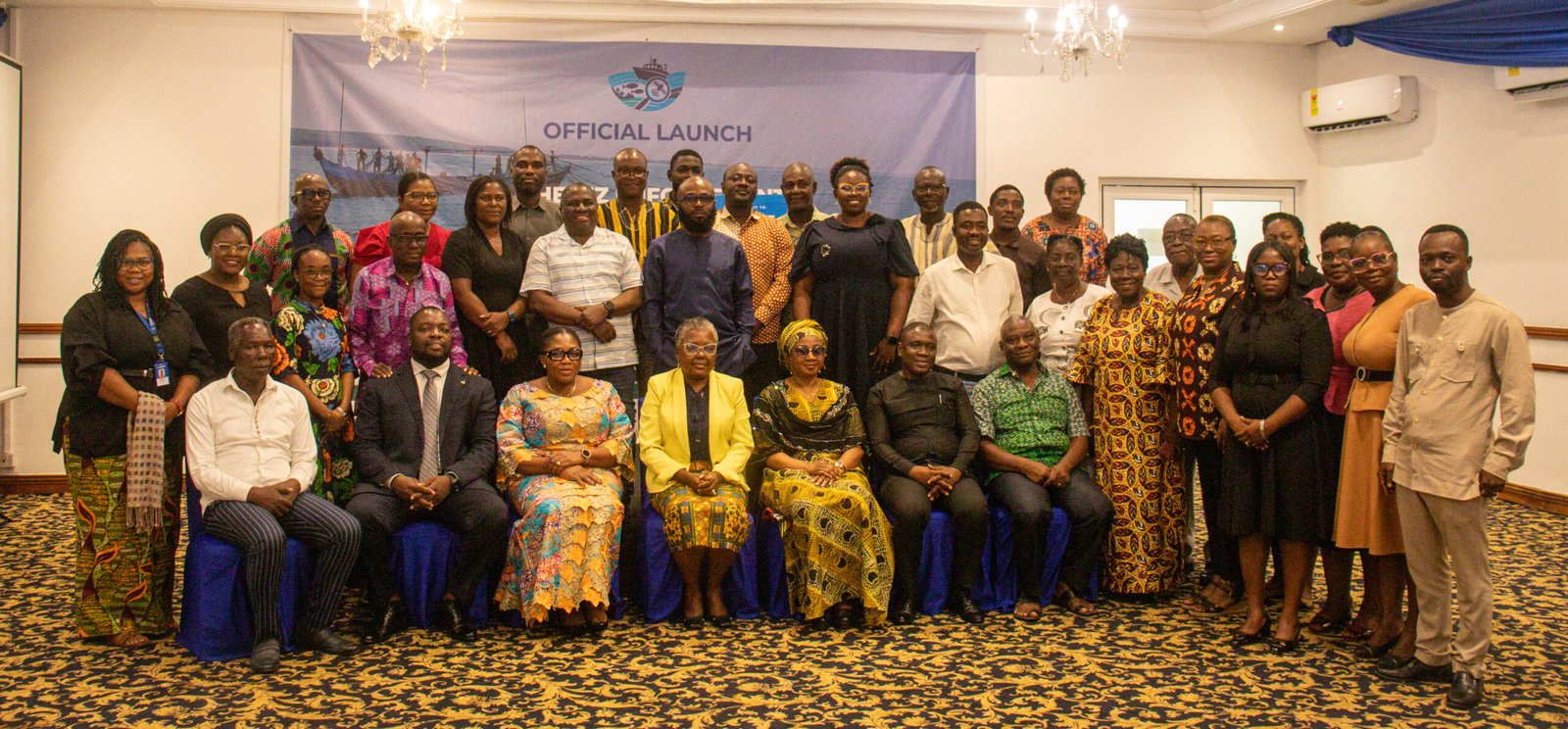
The IEZ Enforcement and Transparency Policies Implementation (IEZET) project was officially launched on 23 April 2026 at the La Palm Royal Beach Hotel in Accra, in a ceremony that drew together fisheries government ministries, enforcement agencies, fishing industry leaders, civil society organizations, and coastal community representatives. The launch marked the formal commencement of a three-year consortium effort to make Ghana’s landmark Fisheries and Aquaculture Act, 2025 (Act 1146) operational, translating its provisions into enforceable regulations, functional institutions, and informed fishing communities.
The Minister for Fisheries and Aquaculture (MoFA), Hon. Emelia Arthur, formally declared the project launched, characterizing the moment as a signal of intent. Speaking at the ceremony, she noted that the project arrives at a decisive moment in Ghana’s fisheries governance with the passage of Act 1146 demonstrating clear commitment to reform. She called on the fishing industry to come along, and work towards achieving voluntary compliance by all at-sea actors thereby reducing the need for enforcement over time.
Opening remarks were delivered by Prof. Berchie Asiedu, Deputy Executive Director of the Fisheries Commission; Peter Kusaana of Hen Mpoano; and Cephas Asare of the Environmental Justice Foundation, reflecting from the outset the breadth of the coalition committed to making Ghana’s fisheries reforms a reality. GFRA’s Board Chair, Dr Jessica Nkansah, set the tone for the day with a clear message: the success of this project will not be determined by any single organization, but by the active collaboration of government, fishing communities, industry actors, civil society, and development partners. She extended particular thanks to Oak Foundation and Oceans 5 for their support and belief in the work ahead.
GFRA Country Director Socrates Segbor presented the strategic case for the IEZET project in a project overview that situated it squarely within Ghana’s current fisheries reality and the reform opportunity created by Act 1146. Act 1146 provides the legal framework to reverse the decline of fish stocks, sub-optimal enforcement, and the threat posed by illegal, unreported, and unregulated (IUU) fishing. IEZET exists to make that framework operational.
The project addresses that operationalization challenge through four integrated components: IEZ Enforcement and Compliance; Transparency and Market Access; Governance and Institutional Strengthening; and MPA Policy and Spatial Protection. These interventions form a coherent national pathway for fisheries recovery, designed to work together rather than in isolation.
The highlight of the launch ceremony was a signature ceremony in which representatives of key stakeholders appended their signatures to the project commitment board providing a visible and deliberate symbol of the shared dedication of Ghana’s institutions and sector leaders to the project’s enforcement and transparency goals.
MoFA’s Sammuel Oteng delivered a presentation on the Roadmap for Stakeholder Engagement on the Draft Fisheries Regulations, sharing a non-exhaustive list of stakeholder groups identified for a sixteen-region engagement process set to begin in the second quarter of 2026. The roadmap demonstrates that the process of turning Act 1146 into enforceable regulations will be a transparent and iterative process involving the people it will ultimately affect. A presentation by Fisheries Commission’s Richner Odonkor on the key provisions of Act 1146 grounded the day’s discussions in the legal framework that the IEZET project exists to support. The new Act introduces a clear, unambiguous Inshore Exclusive Zone extending to twelve nautical miles, reserved for artisanal boats, semi-industrial vessels, recreational fishing boats, and approved research vessels. It introduces substantially higher penalties for IUU fishing, aligning Ghana’s enforcement regime with international instruments. It also establishes a legal basis for Marine Protected Areas and co-management committees, creating the statutory foundation for spatial conservation that did not previously exist in Ghanaian law.
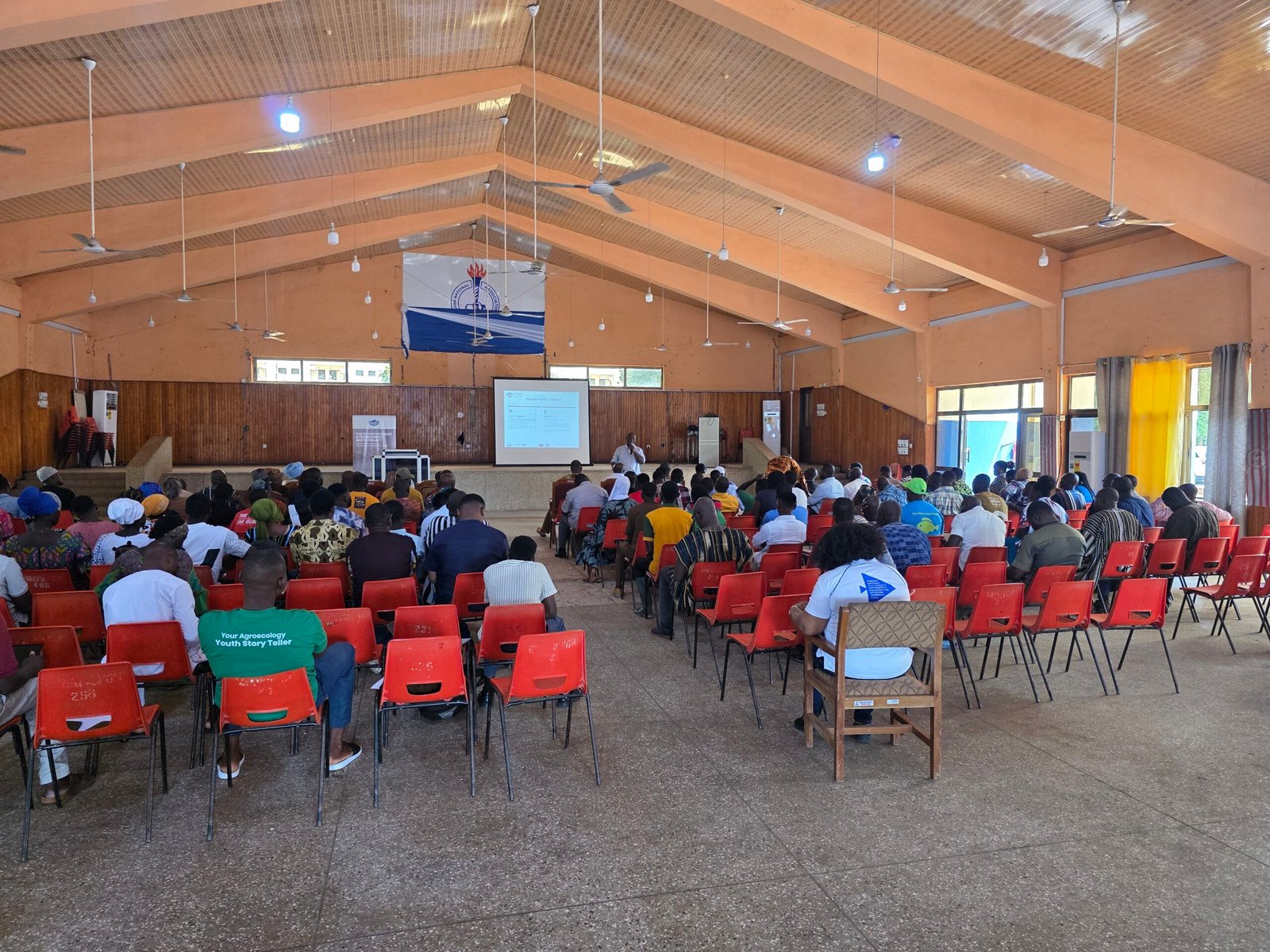
Following presentations on the project’s implementation approach, participants moved into an open stakeholder dialogue session seeking clarifications, making suggestions, and working through the next steps for the project together. The session covered concerns around enforcement capacity, the practicalities of extending the IEZ boundary, the timeline for regulatory development, and the roles that different stakeholder groups would play in the implementation process.
GFRA closed the substantive sessions with a presentation on key risks and mitigation measures, before the Fisheries Commission and MoFA delivered closing remarks summarizing the day’s key takeaways.