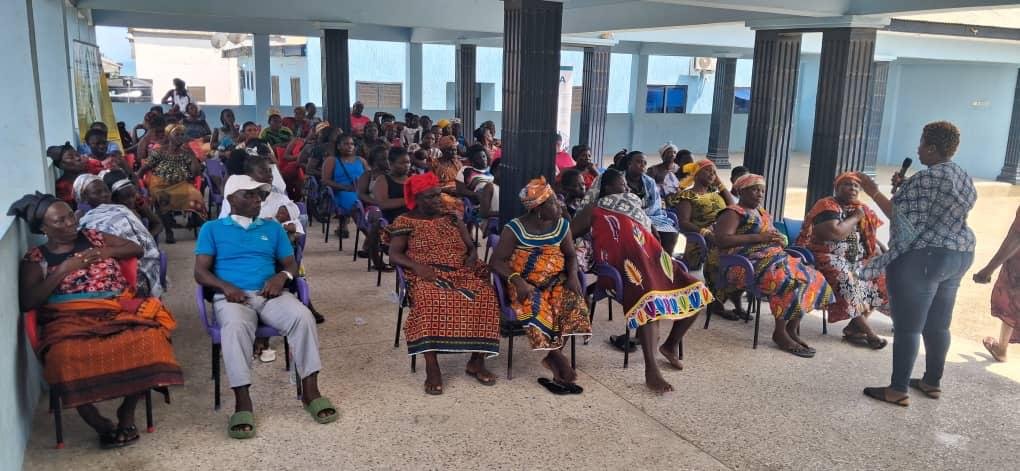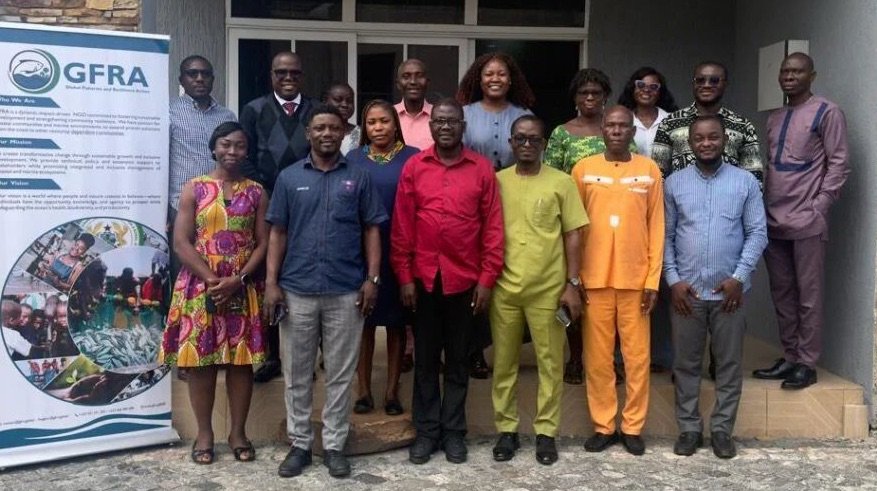
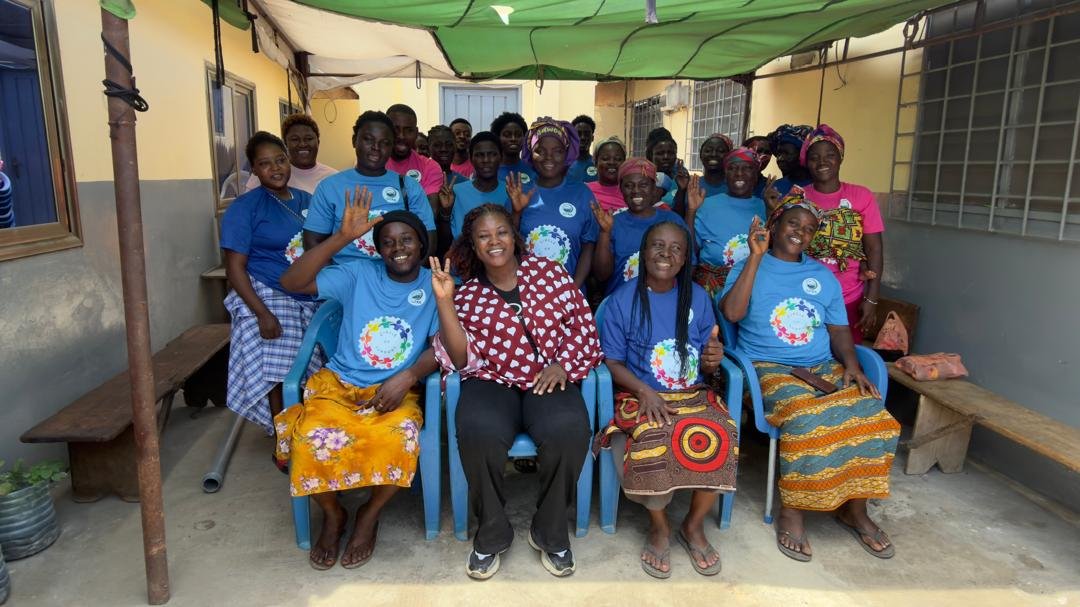
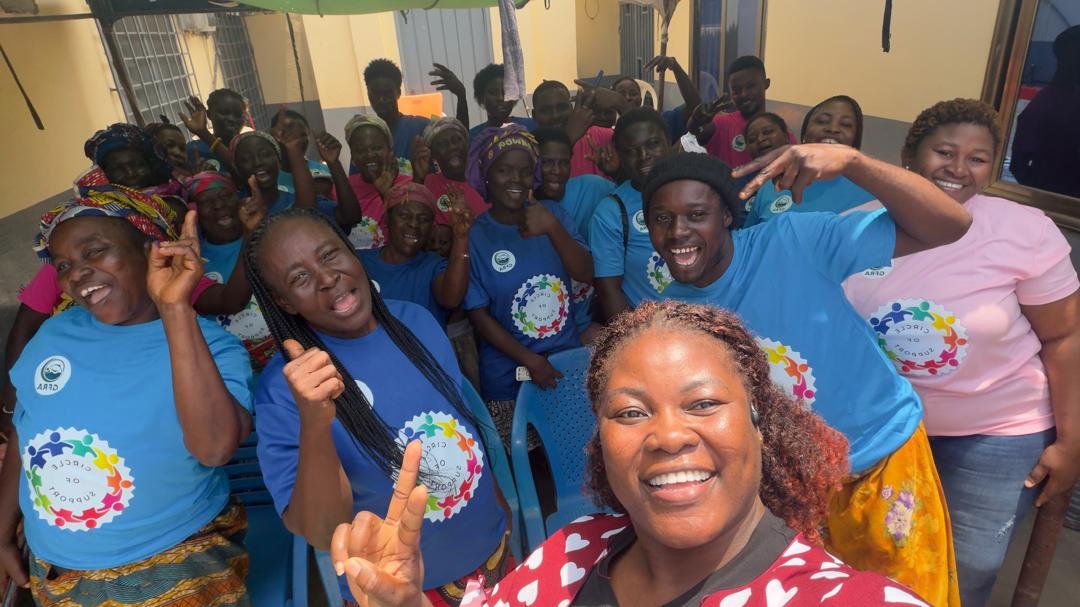
GFRA organised a training activity for Circles of Support Members in the Tema Fishing Harbour on 15 September 2026 at the new Fish Processing Centre to strengthen their ability to identify Gender-Based Violence (GBV), its risks, and how to provide first-line support and make safe referrals.
In the fisheries sector, social and economic challenges often increase the exposure of some vulnerable actors in Ghana’s four coastal regions to Gender-Based Violence (GBV), child labour and trafficking, exploitation, stigma, and other forms of abuse. These vulnerable actors often include women, girls, young people, single mothers, fish porters, fish processors, and descalers, who also sometimes struggle to access formal protection and support services.
In response, GFRA mobilised and trained vulnerable groups at the Tema Fishing Harbour to form a Circle of Support (CoS). The Circle of Support serves as a safe space where members can discuss GBV-related issues, share concerns affecting their work and general well-being, and collectively identify appropriate solutions.
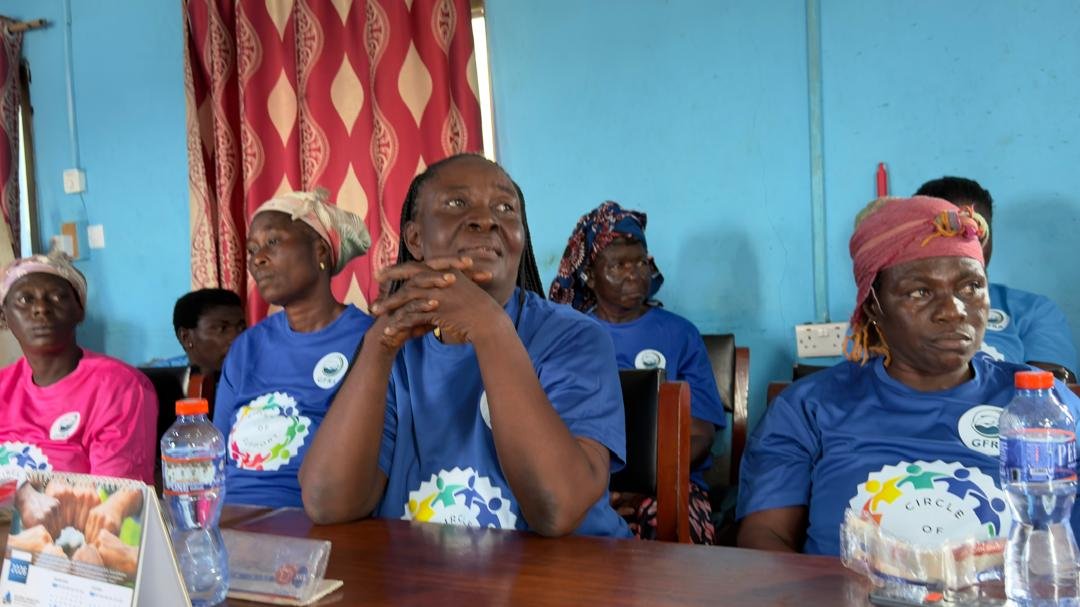
The Tema group comprised fish descalers, porters, and helpers, including young women and men aged 18 to 50, with some participants being parents of three or eight children. The training equipped participants with the knowledge and practical skills needed to establish and strengthen a safe, trusted, community-based support network to prevent and respond to GBV and other protection concerns.
The training enabled participants to explore the meaning and forms of GBV, and the common risks faced by vulnerable actors. Participants learned how to identify protection concerns and the appropriate actions to take when cases are disclosed. The training emphasised first-line support, confidentiality, safe referrals, and linking survivors to appropriate service providers: the Department of Social Welfare, health facilities, the police, and other relevant institutions.
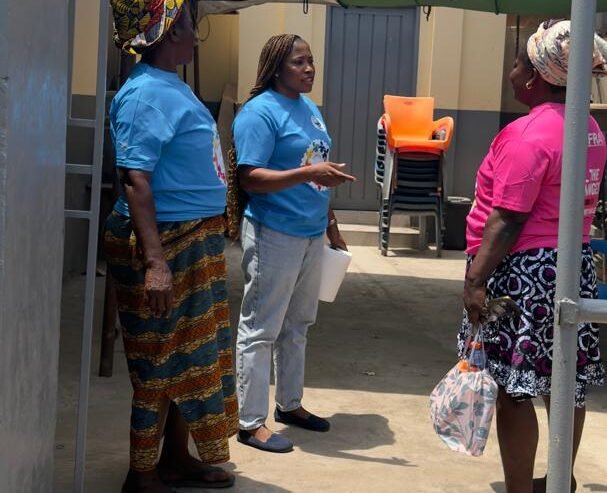
A key part of the training was strengthening participants’ understanding that a Circle of Support is not a replacement for professional services. Rather, it provides a trusted community-level platform where members can receive basic emotional support, information, and guidance. When members face personal or work-related challenges that become overwhelming and have nowhere else to turn, the Circle of Support can provide a safe space to share concerns and receive appropriate guidance and referrals.
The training also encouraged participants to identify practical ways of sustaining their Circle of Support beyond the project period. Participants discussed the importance of regular meetings and communication, peer support, collaboration with community leaders, and maintaining links with relevant service providers and community structures.
Overall, the training strengthened participants’ awareness of GBV and protection issues and enhanced their confidence to support one another within the group. The Circle of Support approach helps create a safer, more responsive fishing community where vulnerable actors in the fisheries value chain can seek help, access appropriate services, and participate more confidently in community life.