GFRA LBG Conducts Virtual Training Workshop for Enumerators in Ghana
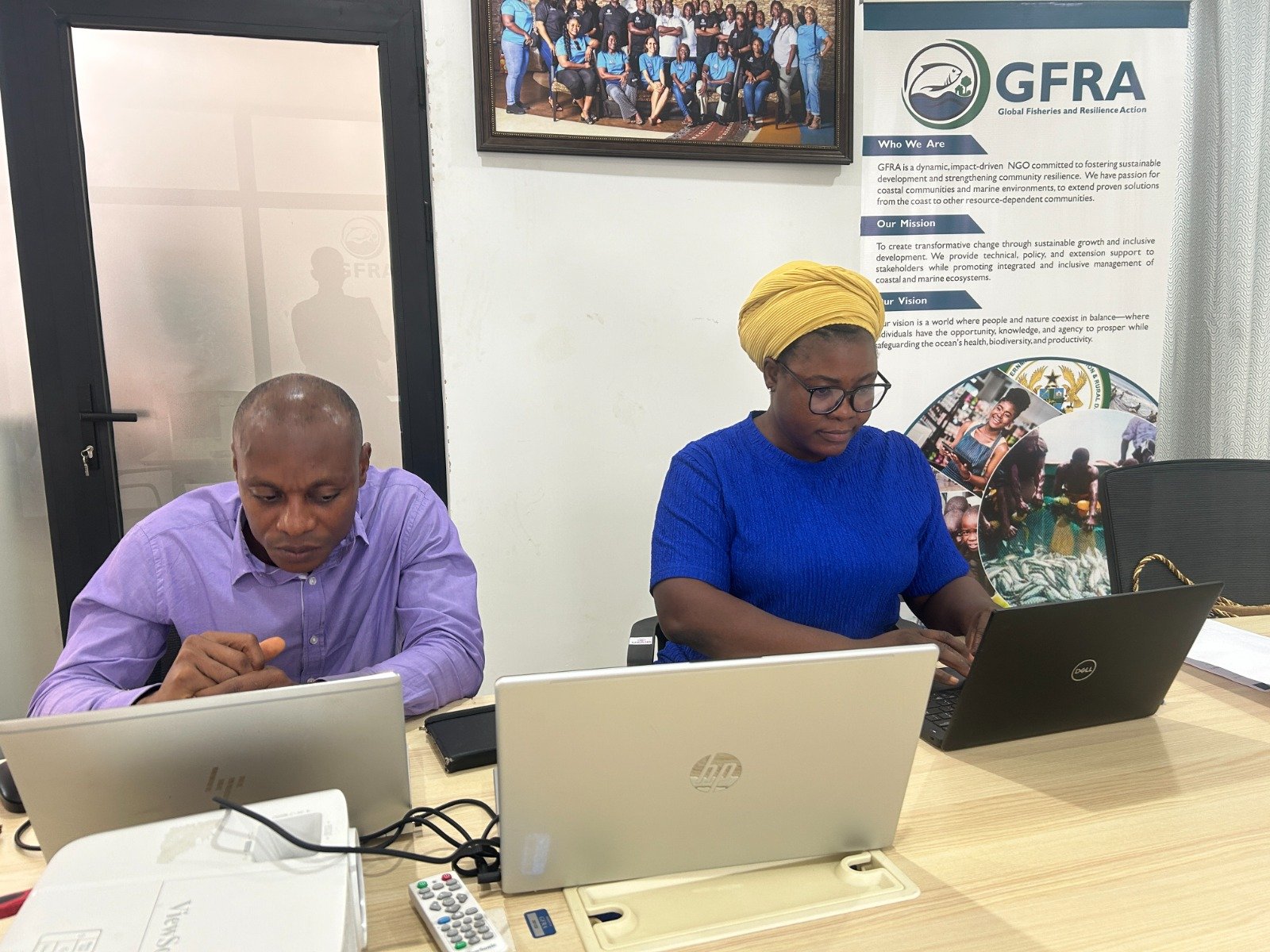
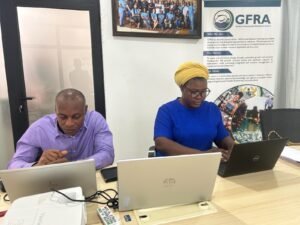
GFRA LBG in partnership with the Fisheries Governance Project, the Accountability Research Center of the American University, and Blue Sanctuaries, trained ten enumerators in a virtual workshop on 24 February 2026, to prepare them to conduct a mapping exercise of fish workers across selected landing beaches in the four coastal regions of Ghana.
The virtual activity led by GFRA’s Director of Gender Youth, and Inclusive Programming, Baviina Musah, was organized to orient the enumerators with the requisite context and to equip them with the data collection skills to effectively conduct the subsequent four-day mapping exercise. The enumerators will collaborate with worker unions in the mapping exercise, particularly the Ghana Agricultural Workers Union (GAWU) who will lead further engagement on worker conditions and pathways for strengthened representation. Other collaborators include the National Union of Teamsters and General Workers (NUTEG), GFRA, and the Environmental Justice Foundation (EJF).
The exercise aims to identify fish workers (employers and employees), clarify their roles and employment relationships, assess worker conditions, document existing and emerging associations, and highlight governance and representation gaps. This builds on the recommendations of the Organizing Women in Ghana’s Fisheries report and the Ghana Fisher Learning Exchange Forum report, both of which called for actions to contribute to more inclusive (especially gender-inclusive), sustainable, and conflict-sensitive fisheries management in Ghana.
The findings from the exercise will inform future targeted organizational capacity-building efforts that seek to build functional systems, clarify mandates, bridge communication gaps, and deliver tangible membership benefits that increase participation in and strengthen the advocacy effectiveness of those organizations. By building these capacities, organizations will be better able to represent fish workers in fisheries governance processes and advance ecological stewardship in coastal communities.